Venues / State Farm Arena
State Farm Arena
Strategic planning resources for large-scale general sessions, corporate events, and arena activations at State Farm Arena, a connected component of Atlanta's downtown Centennial Park convention district.
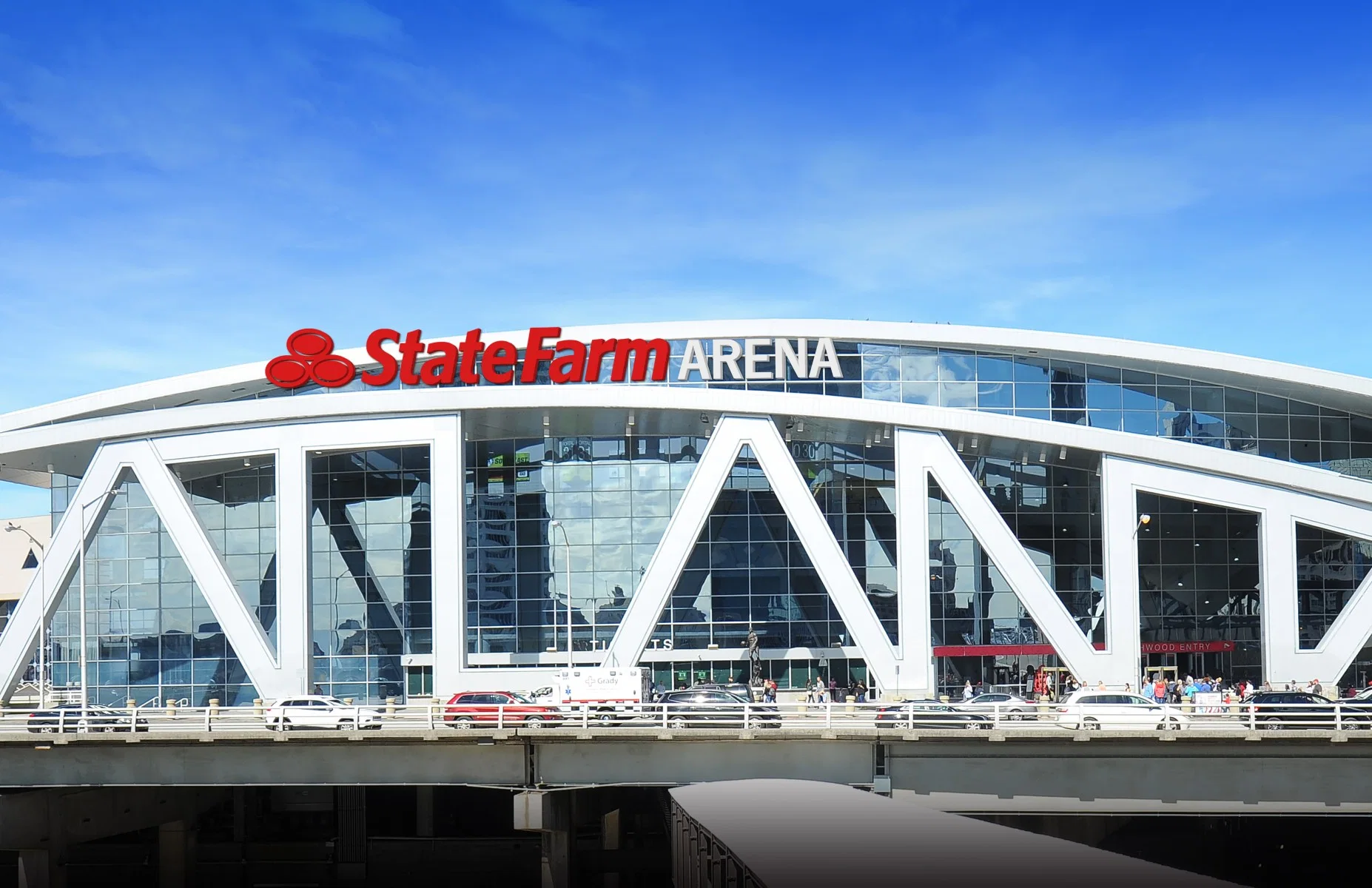
State Farm Arena's Role in Atlanta's Downtown Convention Cluster
Atlanta's trade show and convention activity divides into four operational zones, each serving distinct market segments. The downtown Centennial Park district functions as the flagship concentration, where the arena joins the Georgia World Congress Center, Centennial Olympic Park, and AmericasMart to create unmatched depth for large-scale programming. This clustering enables planners to combine arena general sessions with adjacent exhibit halls and outdoor activations without dispersing attendees across distant locations.
The arena's connectivity to the CNN Center complex allows for unified event flows where participants transition between main-stage presentations and supporting exhibit or meeting components within a compact, walkable district. This operational advantage supports comprehensive trade programs, corporate conferences, and hybrid experiences that leverage both the dramatic scale of the arena and the specialized capabilities of neighboring facilities.
Unlike standalone suburban venues that primarily address regional corporate or community needs, the downtown cluster facilitates national and international events that benefit from centralized infrastructure, diverse venue options, and the urban energy of central Atlanta. Planners focused on high-visibility activations find particular value in this ecosystem, where the arena provides the focal point for keynote moments while connected properties handle concurrent exhibition and networking functions.
Effective coordination begins with recognizing these interrelationships rather than viewing any single venue in isolation. This district-level perspective helps align event objectives with the specific strengths of the arena and its surrounding campus.
Capacity Ranges and Configuration Options
The arena offers documented flexibility with seating for approximately 16,600 during basketball configurations and expansion to 21,000 for concert or full-arena setups. This range allows precise matching of venue scale to anticipated attendance, whether for corporate general sessions drawing several thousand or larger ticketed events that fill the entire bowl. Planners must evaluate these capacities early to determine appropriate exhibit footprints, staging dimensions, and content delivery methods.
The completed major renovation introduced updated production infrastructure, improved audience amenities, and enhanced technical capabilities that support complex audiovisual presentations common in contemporary events. These upgrades enable higher production standards while maintaining clear sightlines from all seating levels to both the arena floor and any elevated display elements.
Variable seating arrangements permit reconfiguration of the floor and lower bowl areas for different event formats. This adaptability proves valuable when events require space for product demonstrations, interactive brand zones, or exhibit-style installations alongside main programming. Operational planning should incorporate how these layout choices affect attendee circulation, loading logistics, and integration with the connected CNN Center spaces.
Understanding these specifications prevents mismatches between program ambitions and physical realities. Arena events demand different considerations than convention center halls, particularly regarding vertical scale, audience distance, and the need for elements to register impact across a much larger volume.
Campus Connectivity with CNN Center and Georgia World Congress Center
The direct connection between the arena and the CNN Center creates logistical efficiencies that distinguish downtown Atlanta programming. This linkage, combined with immediate proximity to the Georgia World Congress Center, supports events that span multiple venues without requiring shuttles or external transportation. Attendees can move between arena sessions and exhibit floors while remaining within the secured campus environment.
Such connectivity proves especially advantageous for trade organizations and corporations that require both inspirational large-audience moments in the arena and detailed product showcases or breakout sessions in adjacent facilities. Centennial Olympic Park further extends the district by offering public spaces for outdoor activations, receptions, or experiential elements that complement indoor programming.
Planning for these integrated experiences requires attention to synchronized scheduling, unified theming across properties, and coordinated registration that treats the campus as a single operational unit. This approach maximizes the return on investment by creating a cohesive attendee journey that leverages each venue's distinct capabilities.
The resulting multi-venue strategies represent one of the strongest differentiators for downtown Atlanta compared to more isolated venues in other zones. Events at the arena frequently incorporate elements from the broader campus to deliver comprehensive experiences that standalone arenas cannot match.
Exhibit and Activation Planning for Arena-Scale Events
Incorporating exhibits and brand experiences into programs requires attention to the unique scale and viewing dynamics of arena environments. Display elements must maintain visibility and engagement from distances typical in these settings while integrating with overall production design, lighting, and seating configurations. The post-renovation infrastructure supports more advanced integration of custom components with main-stage technical systems.
Successful planning considers how exhibits function within variable floor layouts and across different capacity settings. Whether creating focal displays for product launches on the arena floor or branded environments in concourse and pre-function areas, solutions need to perform effectively for audiences accustomed to high-production events. This often means emphasizing bold graphics, strategic lighting, and structural elements that command attention within the larger volume.
Coordination extends beyond individual components to encompass how exhibits support and enhance the primary programming. Alignment with event theming, narrative flow, and attendee movement patterns ensures that display investments contribute to unified messaging rather than competing with arena-scale presentations.
Atlanta's status as a major convention market means exhibits at venues like the arena often serve sophisticated audiences that encounter premium executions across the country. Planning therefore benefits from approaches that account for these elevated expectations while working within the specific operational parameters of the arena and its connected campus.
Venue Selection Context Across Atlanta's Market Zones
Atlanta's practical event landscape includes four primary operating zones that address different planning priorities. The downtown Centennial Park cluster, led by the arena along with the Georgia World Congress Center and AmericasMart, delivers the deepest combination of large-scale, interconnected facilities. This zone excels for programs requiring both arena impact and extensive exhibit or meeting support within walking distance.
By comparison, the airport and College Park corridor focuses on fly-in convenience through venues positioned around ATL SkyTrain access. The Cumberland-Cobb submarket serves corporate and association events seeking northwest suburban accessibility, while the Duluth-Gwinnett area accommodates community expos and consumer shows with arena-capable spaces. Each zone captures specific demand segments rather than competing directly.
The arena's placement in the downtown flagship zone makes it the appropriate choice for events that benefit from central location, campus connectivity, and the ability to scale between general sessions and supporting activations. This differentiation allows organizers to select venues based on audience travel patterns, program complexity, and desired experiential outcomes.
Market awareness of these distinctions supports more strategic decisions that align venue attributes with event goals. The downtown cluster's concentration of assets, including the renovated the arena, positions Atlanta competitively for national programs that might otherwise divide across multiple cities.
Operational Best Practices for Downtown Arena Events
Coordinating events at the arena benefits from early definition of objectives and thorough evaluation of how the arena's capacities and configurations align with those goals. Attention to the venue's connection with the CNN Center and Georgia World Congress Center enables development of integrated schedules that optimize attendee flow and resource utilization across the campus.
Logistical planning should address the specific requirements of arena operations, including how renovation improvements affect technical capabilities, loading access, and audience management. These factors influence decisions about exhibit placement, timing of activations, and coordination with any concurrent activities in adjacent facilities.
Successful programs typically incorporate sufficient lead time to customize display and staging elements to the unique proportions and sightlines of the arena. This preparation helps ensure that every component contributes effectively within the larger environment while maintaining consistency with broader event branding and messaging.
As Atlanta continues developing its meetings infrastructure, venues like the arena will support increasingly sophisticated hybrid formats that blend education, exhibition, and entertainment. Planners who approach these opportunities with detailed understanding of district relationships and operational realities achieve stronger outcomes and more memorable attendee experiences.
Long-Term Considerations for Arena-Based Programs in Atlanta
The evolution of Atlanta's events market suggests continued expansion in the use of arena venues for corporate and trade programs that require scale beyond traditional ballrooms. The arena's flexibility, post-renovation capabilities, and downtown positioning position it to accommodate emerging formats that integrate large plenary experiences with interactive exhibit zones and experiential marketing elements.
Ongoing development around the Centennial Park district, including enhancements to connectivity and supporting infrastructure, will likely increase the appeal of this campus for major national and international gatherings. Organizations planning multi-year event rotations can benefit from understanding how these venues complement one another within Atlanta's four-zone structure.
Strategic coordination resources help navigate the nuances of arena events while maintaining focus on measurable outcomes. By treating the arena as an integrated component of the larger downtown ecosystem rather than an isolated facility, planners create programs with greater cohesion, impact, and operational efficiency.
This comprehensive approach to venue utilization reflects the maturing sophistication of Atlanta's position in the national convention landscape, where depth of connected facilities and attention to district-level differentiation create competitive advantages for hosted events.
Questions
Frequently asked questions
Direct answers on timing, field leadership, and venue coordination for this Atlanta scope.
What is the seating capacity of State Farm Arena?
The arena seats approximately 16,600 for basketball configurations and can accommodate up to 21,000 for concerts and other end-stage events.
Is State Farm Arena connected to other major Atlanta venues?
Yes, the arena maintains a direct connection to the CNN Center and forms part of the campus that includes the nearby Georgia World Congress Center, enabling integrated multi-venue event programming within the downtown Centennial Park district.
Has State Farm Arena undergone renovation?
The arena has completed a major renovation that updated its technical systems, seating, production capabilities, and audience amenities while preserving its established connection to the CNN Center complex.
What types of events are suitable for State Farm Arena?
The venue supports large general sessions, corporate events, product launches, awards programs, and brand activations that benefit from arena-scale flexible seating and high-impact presentation capabilities within Atlanta's downtown convention cluster.
How does State Farm Arena fit into Atlanta's overall event zones?
It strengthens the flagship downtown Centennial Park zone alongside the Georgia World Congress Center and AmericasMart, distinguishing it from airport-corridor venues focused on fly-in access and suburban facilities serving regional corporate or community demand.
Why consider the broader campus when planning for State Farm Arena?
The physical and operational connections to CNN Center and proximity to the Georgia World Congress Center allow for smooth programs that combine arena presentations with exhibits, meetings, and activations across multiple connected facilities.
Related links