Services / Trade Show General Contracting in Atlanta GA
Trade Show General Contracting in Atlanta GA
Orchestrating complete exhibit programs across Atlanta's venue clusters demands precise coordination of timelines, subcontractors, logistics, and compliance protocols tailored to downtown megashows, airport fly-ins, and suburban corporate gatherings.
Downtown Atlanta Venue Cluster Coordination
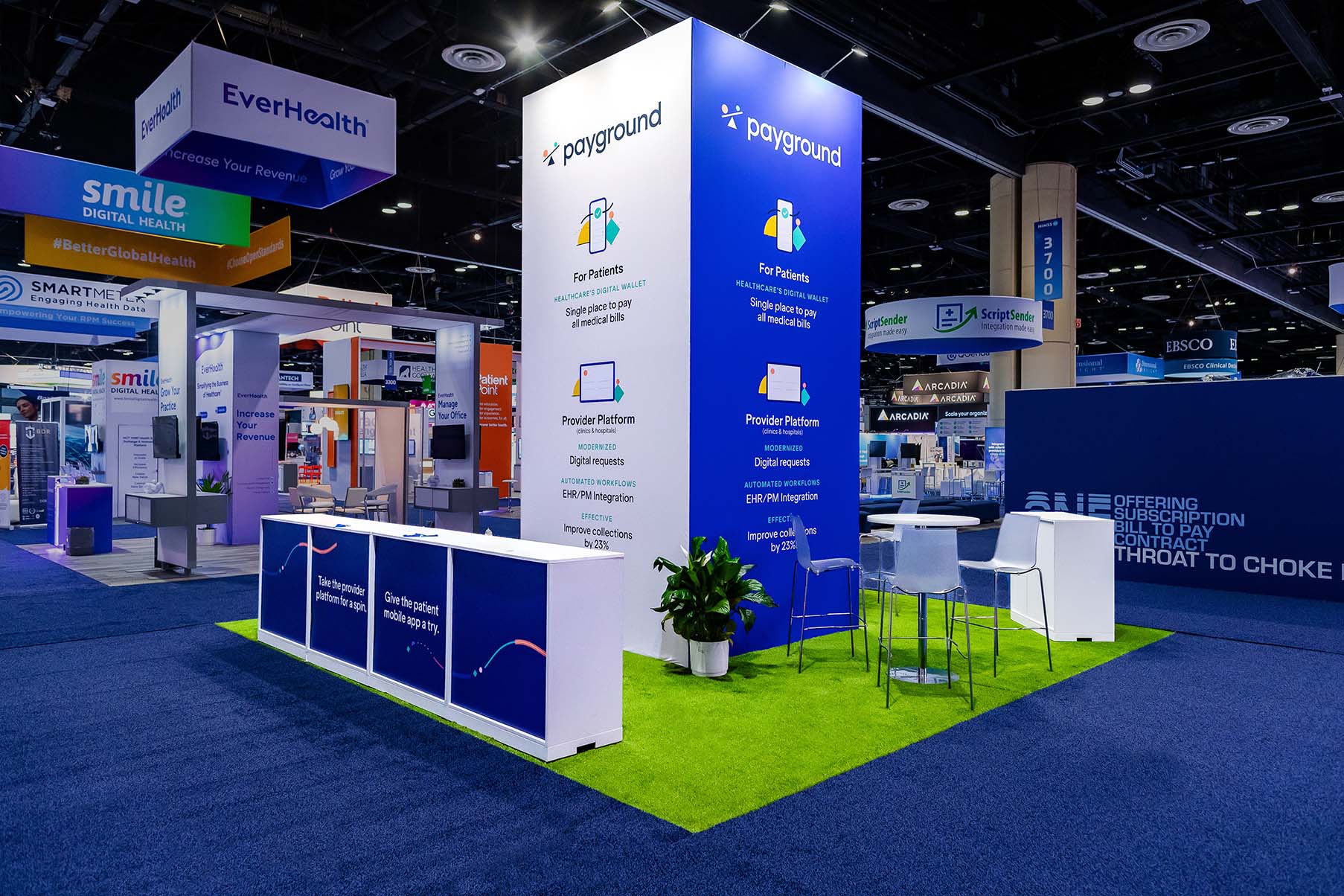
The downtown Atlanta cluster, encompassing the Georgia World Congress Center, Centennial Olympic Park, and AmericasMart Atlanta, represents the epicenter of flagship conventions, expansive exhibits, public activations, and market-week showroom support alongside conference logistics. General contracting here involves dissecting complex floor plans across multiple halls, coordinating advance warehousing releases timed to building-specific dock schedules, and sequencing the influx of modular booth components amidst peak urban traffic volumes. Contractors must navigate the Georgia World Congress Center's vast exhibit space configurations, which support simultaneous large-scale trade shows requiring parallel setup tracks for island displays, linear booths, and overhead rigging approvals. Centennial Olympic Park activations demand weather-contingent outdoor exhibit reinforcements and pedestrian flow modeling to prevent bottlenecks during high-attendance public events. AmericasMart's multi-floor market campus adds layers of elevator load limits, showroom adjacency protocols, and buyer preview phasing that dictate precise material staging and handoff points between fabrication teams and activation crews.
Exhibit programs in this zone often scale to hundreds of thousands of square feet, compelling general contractors to orchestrate forklift paths through congested service corridors, synchronize lighting and power drops with venue electricians, and implement shift rotations that align with 24-hour show site availability windows. Downtown logistics further complicate with MARTA station proximities influencing crew arrivals and the need for Just in Time deliveries to minimize double-handling of high-value custom builds. Successful coordination hinges on pre-show walkthroughs that identify pinch points like escalator weight restrictions at AmericasMart or the Georgia World Congress Center's hall divider configurations, ensuring that installation timelines compress without compromising safety or structural integrity. Post-installation, contractors monitor activation phases, adjusting for real-time attendee surges that impact booth access during peak market weeks.
Airport College Park Corridor Efficiency
Venues in the airport and College Park corridor, including the Georgia International Convention Center and Gateway Center Arena at College Park, cater to fly-in conferences, airport-proximate events, sports-adjacent activations, and accelerated meeting programs, where general contracting prioritizes streamlined logistics leveraging ATL SkyTrain access and Hartsfield-Jackson proximity. At the Georgia International Convention Center, contractors coordinate compact exhibit hall layouts with rapid load-in bays designed for high-velocity turnarounds, mapping tractor routes from interstate feeders to minimize ground time for international shipments. Gateway Center Arena introduces hybrid arena-floor configurations that blend exhibit islands with stage-facing displays, requiring precise alignment of rigging points and audiovisual cable runs to accommodate sports event crossovers. General contracting protocols here emphasize compressed schedules, often fitting full setups into 12-18 hour windows between meetings, with contingency buffering for flight delays impacting key personnel arrivals.
Material flow in this zone benefits from dedicated SkyTrain linkages that facilitate crew and small-freight shuttles, but contractors must still sequence larger pallet jacks through service elevators constrained by arena event residuals. Pre-event planning includes floor plan annotations for SkyTrain-adjacent unloading zones, ensuring that booth frameworks and interactive elements deploy without impeding attendee pathways from airport terminals. Dismantle phases demand even tighter choreography to clear halls ahead of Back to Back bookings, incorporating asset scanning for carrier pickups aligned with outbound flight banks. This corridor's operational tempo rewards contractors who integrate real-time tracking of inbound containers with venue security protocols, delivering exhibits ready for immediate engagement in fast-paced conference environments.
Northwest Cumberland Cobb Submarket Strategies
The Cumberland and Cobb submarket, highlighted by the Cobb Convention Center, focuses on corporate events, regional trade shows, ballroom-driven programs, and northwest Atlanta event work, where general contracting adapts to mid-scale footprints and flexible space divisions. Cobb Convention Center's configurations blend exhibit halls with divisible ballrooms, prompting contractors to customize load-in vectors for wheeled carts navigating carpeted transitions and pre-set banquet layouts. Regional shows here draw community and association crowds, necessitating exhibit designs that balance visibility with aisle compliance in narrower hall geometries compared to downtown behemoths. General contracting involves coordinating hybrid setups where trade show booths interface with plenary sessions, requiring modular framework adjustments and temporary power grids that avoid ballroom AV conflicts.
Logistics in this northwest zone account for Galleria-area traffic patterns, with contractors plotting advance routes from I-75 interchanges to venue docks, staging materials in sequence to support phased installations that accommodate pre-event catering builds. Supervision extends to monitoring booth traffic during regional buyer circuits, ensuring interactive elements remain operational amid fluctuating attendance. Dismantle efficiency leverages the center's extended move-out windows, allowing sorted asset recovery without overlapping corporate bookings. This submarket's corporate lean rewards precise budget adherence, as general contractors layer in contingency for suburban permitting variances and subcontractor travel radii.
Northeast Duluth Gwinnett Corridor Execution
The Duluth and Gwinnett corridor, led by Gas South Convention Center, captures association gatherings, community expos, and expansive suburban programming, where general contracting tailors to larger hall capacities outside downtown congestion. Gas South's arena-adjacent exhibit spaces demand coordination of overhead truss installations alongside event staging, with contractors sequencing beam placements to clear sightlines for concurrent performances. Regional demand here emphasizes scalable exhibits for community trade shows, incorporating weather-resilient flooring for Hall to Plaza transitions and robust power allocations for demo zones drawing local exhibitors. General contracting protocols include mapping Gwinnett County access from I-85, optimizing flatbed deliveries to peripheral docks that handle higher-volume regional freight without urban bottlenecks.
Operational flow benefits from the center's integrated campus layout, enabling contractors to stage subassemblies in underutilized zones before final hall pushes, reducing peak-hour crane dependencies. Activation phases align with association schedules, with real-time tweaks for booth clustering that enhance networking flows. Teardown coordination prioritizes sorted outbound sorting for multi-carrier pickups, capitalizing on extended post-show access to prevent asset dwell fees. This corridor's growth trajectory positions general contractors to preempt scaling needs for emerging mega-regional events.
Cross-Zone Logistics and Timeline Synchronization
Atlanta's four-zone fragmentation requires general contracting to master inter-venue material shuttles, consolidating shipments from national fabricators into zone-specific pods that feed GWCC downtown, GICC airport, Cobb northwest, and Gas South northeast without cross-contamination delays. Contractors develop master Gantt charts overlaying venue move-in windows—such as Georgia World Congress Center's pre-dawn hall accesses versus Cobb's daylight ramps—ensuring booth modules arrive sequenced for fork-assisted assembly. Risk matrices address variables like downtown bridge weight limits, airport security scans, and suburban toll variances, with backup routing via apps tracking real-time interstate flows.
Supervisory cadences span zones via centralized dashboards, flagging variances in labor handoffs or power-up sequences, while unified reporting consolidates compliance logs from disparate facility managements. This panoramic oversight prevents silo errors, delivering unified exhibit readiness across Atlanta's spectrum.
Compliance Supervision and Risk Mitigation
Facility-specific protocols across Atlanta venues mandate rigorous general contracting oversight, from GWCC's rigging certifications and fire marshal walkthroughs to GICC's SkyTrain freight manifests and Gas South's plaza permit stacks. Contractors compile pre-approval dossiers aligning booth loads with hall capacities, sequencing inspections to compress setup envelopes. On-site, supervision enforces aisle buffers, egress modeling, and load-bearing verifications, adapting to real-time changes like AmericasMart showroom reconfigurations or Cobb ballroom partitions.
Post-activation audits capture discrepancies for dismantle refinements, ensuring carrier manifests match asset inventories amid multi-zone recoveries. This diligence sustains exhibitor compliance while optimizing operational velocities.
Questions
Frequently asked questions
Direct answers on timing, field leadership, and venue coordination for this Atlanta scope.
What does trade show general contracting involve in Atlanta?
It orchestrates exhibit lifecycles across zones like downtown GWCC, airport GICC, Cobb, and Gas South, coordinating subcontractors, logistics, timelines, and venue compliances for turnkey execution.
How do Atlanta's venue clusters impact general contracting?
Downtown demands high-volume hall sequencing, airport prioritizes rapid SkyTrain turns, northwest handles corporate ballrooms, and northeast scales for regional arenas, requiring zonal adaptations.
What logistics challenges arise in multi-zone Atlanta shows?
Fragmented sites necessitate consolidated routing, traffic-buffered deliveries, and synchronized Gantts to align material flows from interstates to specific docks without delays.
How is installation and dismantle coordinated across venues?
Via sequenced subcontractor handoffs, facility-timed windows, and real-time supervision, compressing setups in compact GICC halls or expansive GWCC spaces.
Why emphasize turnkey execution in Atlanta general contracting?
The city's zone diversity—from urban megashows to suburban regionals—benefits from unified oversight that mitigates risks and streamlines exhibitor focus on engagement.
Related links