
Locations / College Park GA Trade Show Exhibit Planning for Airport-Area Venues
College Park GA Trade Show Exhibit Planning for Airport-Area Venues
College Park serves as Atlanta's primary airport-adjacent trade show corridor, where the Georgia International Convention Center and Gateway Center Arena leverage ATL SkyTrain access and fly-in convenience for efficient event execution.
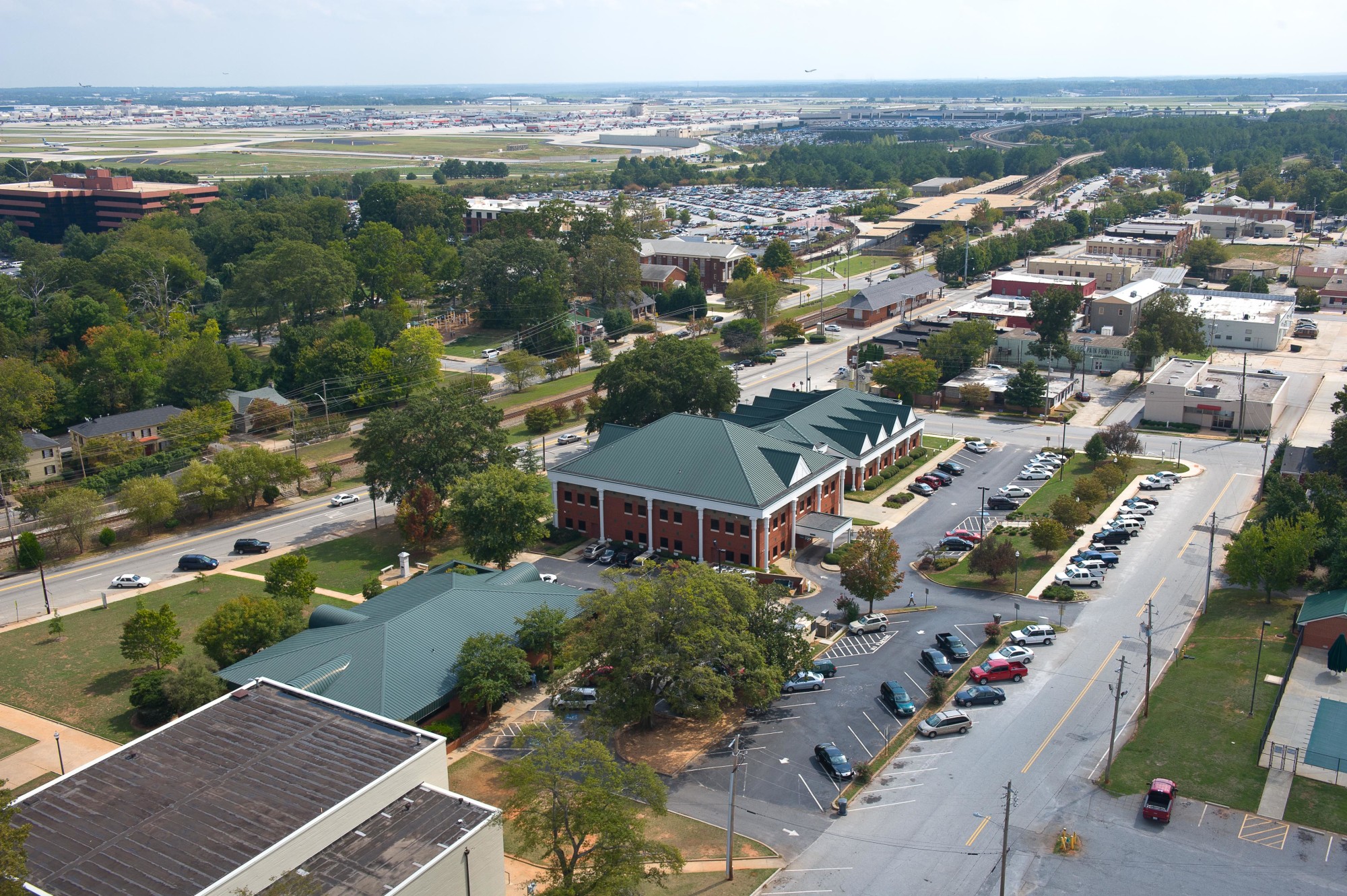
College Park's Position in Atlanta's Trade Show Zones
Atlanta's trade show ecosystem operates across distinct practical zones rather than as a single undifferentiated market. The airport and College Park corridor represents one of these four primary areas, complementing downtown Atlanta, the Cumberland-Cobb submarket, and the Duluth-Gwinnett corridor. This division reflects real operational patterns where College Park draws events that emphasize aviation accessibility and reduced transit friction for national and international participants.
The Georgia International Convention Center anchors much of this activity, deliberately positioned to integrate with ATL SkyTrain for smooth movement between terminals and exhibit halls. Such infrastructure supports conventions where time efficiency ranks as a top priority, allowing organizers to schedule programming that aligns with flight banks. Planning exhibit presence here differs measurably from downtown approaches that assume longer lead times and broader local attendance.
Understanding these zonal distinctions enables more precise resource allocation. College Park events often feature concentrated peak periods driven by air travel schedules, necessitating booth designs and staffing models that accommodate rapid onboarding and high-intensity interaction windows. Coordination frameworks that reference the full Atlanta landscape prevent siloed planning that overlooks complementary opportunities in other districts.
This market structure rewards strategies that treat College Park not as an isolated outpost but as a specialized node within the broader metro network. Events at GICC frequently intersect with industries that value speed to market and direct airport proximity over the density of downtown activations.
Georgia International Convention Center Planning Specifics
The Georgia International Convention Center stands as the flagship facility shaping College Park's trade show identity. Its design and location directly adjacent to airport infrastructure create distinct operational parameters for exhibit coordination. Floor plans available through official channels reveal flexible configurations that support varied booth footprints while maintaining clear circulation paths tied to SkyTrain entry points.
Event planners benefit from understanding how GICC layouts interact with arrival patterns. Attendees utilizing the SkyTrain often enter at predictable intervals aligned with flight schedules, creating surge periods that influence booth placement and demonstration timing. Coordination must account for these flows to prevent congestion and ensure exhibits remain visible during high-traffic moments.
Venue documentation further details loading and setup considerations inherent to the airport corridor. These elements require advance mapping of material movement sequences that respect both convention center protocols and surrounding transportation infrastructure. Successful exhibits in this environment typically feature modular components that facilitate efficient assembly within the time constraints of fly-in attendee calendars.
Beyond physical layout, GICC programming often attracts associations and corporate groups whose participants arrive with specific expectations formed by travel fatigue. Exhibit strategies that incorporate comfortable interaction zones and concise messaging align more effectively with this audience than designs optimized for downtown pedestrian traffic.
Gateway Center Arena and Complementary Event Opportunities
Gateway Center Arena at College Park extends the district's capabilities beyond traditional convention halls into arena-scale experiences. While primarily recognized for sports and entertainment, the facility increasingly supports trade show adjacent activations, product launches, and hybrid corporate events that leverage its seating bowl and floor configurations. This creates additional layers for strategic exhibit planning within the same airport corridor.
The arena's proximity to both GICC and the international airport allows for multi-venue campaigns where a core exhibit at the convention center pairs with specialized activations at the arena. Such integration requires careful scheduling coordination that respects each facility's distinct operational rhythms and audience movement patterns between sites.
Planning for Gateway Center events emphasizes adaptability. The space's design favors bold, large-format elements visible from multiple vantage points, differing from the linear booth rows common in convention centers. Coordination resources must translate these requirements into cohesive brand presentations that function across both venue types without redundant fabrication.
This duality within College Park encourages integrated approaches where exhibit elements serve dual purposes. Components designed for GICC modularity can be reconfigured for arena sightlines, maximizing investment across multiple event formats in the airport zone.
Logistical Nuances of Airport Corridor Exhibit Coordination
The College Park area's defining characteristic remains its smooth integration with Hartsfield-Jackson Atlanta International Airport operations. This creates both advantages and specific constraints for trade show logistics. SkyTrain connectivity eliminates many traditional transportation variables, allowing planning to focus instead on precise timing around security protocols and terminal transit.
Material handling in this corridor follows patterns influenced by airport security perimeters and dedicated venue access routes. Coordination involves mapping these pathways in advance to align with both airline cargo schedules and convention center receiving windows. Such attention to sequence prevents delays that compound quickly when exhibitors and attendees operate on tight flight itineraries.
Attendee behavior in airport-adjacent events also reflects travel realities. Participants frequently carry luggage or maintain same-day return plans, influencing how they allocate time within exhibit halls. Effective planning incorporates these patterns by positioning key demonstrations and meeting spaces near primary flow lines rather than deeper within booth structures.
Broader Atlanta coordination adds another dimension. While College Park operates as a self-contained zone for certain events, many exhibitors participate across multiple districts within a single trip. Planning resources that map these interconnections help optimize exhibit assets that transfer efficiently between downtown, College Park, and suburban venues.
Exhibit Design Strategies for Fly-In Audiences
Fly-in attendees at College Park events present distinct engagement challenges compared to those arriving by local transport in other Atlanta districts. With limited time between flights or sessions, these participants respond better to concise, high-impact presentations rather than extended consultations. Design approaches should therefore prioritize immediate visual communication and streamlined interaction paths.
Graphics and messaging for GICC and Gateway Center events benefit from testing against typical travel conditions. Elements that remain legible under varied lighting conditions near SkyTrain entrances or perform effectively in arena environments create stronger connections. Coordination includes reviewing venue lighting specifications and sightline studies to refine these components before fabrication.
Storage and reconfiguration considerations gain importance in this market segment. Attendees who value efficiency often appreciate exhibits that demonstrate similar adaptability. Modular systems that reconfigure quickly between event days or across nearby venues align with the operational tempo of airport-driven trade shows.
Technology integration requires particular care given the surrounding aviation environment. Planning should verify venue guidelines regarding wireless systems and power requirements while ensuring backup solutions address potential interference factors unique to airport proximity.
Cross-District Integration Within the Atlanta Market
While College Park functions as a specialized airport corridor, its greatest strategic value often emerges when integrated with other Atlanta zones. Downtown venues like the Georgia World Congress Center and AmericasMart serve different programming needs and attendee demographics, creating opportunities for coordinated campaigns that span districts without operational conflicts.
Effective planning maps the relationships between these areas, identifying events where College Park serves as an efficient extension or alternative to downtown. This approach allows exhibitors to leverage the same core assets across multiple touchpoints, adjusting only for venue-specific requirements such as ceiling heights, floor load capacities, or traffic patterns.
The full Atlanta landscape includes suburban concentrations in Cobb and Gwinnett counties that capture additional association and corporate demand. Coordination that references all four primary zones prevents fragmented decision-making and supports more sophisticated budgeting of exhibit investments across the metro region.
This integrated perspective treats College Park as a complementary strength rather than a standalone market. Events that begin with airport arrivals at GICC can flow into downtown programming, or vice versa, when planning accounts for the practical transit realities between districts.
Preparation Framework for College Park Events
Successful participation in College Park begins with thorough venue and district analysis. Reviewing official floor plans for both GICC and Gateway Center Arena establishes baseline parameters for booth dimensions, utility access, and circulation requirements. This documentation, combined with SkyTrain schedule data, forms the foundation for realistic timelines and resource allocation.
Audience research specific to airport-adjacent events reveals patterns around dwell time, information retention under travel conditions, and preferences for certain demonstration formats. Incorporating these insights early allows for targeted adjustments to messaging, graphics scale, and interaction protocols before design finalization.
Logistics mapping follows, documenting material routes, receiving schedules, and contingency options tied to airport operations. This step ensures alignment between exhibit components and the operational constraints of the College Park corridor, reducing on-site complications during move-in and show days.
Final preparation includes cross-referencing the College Park calendar against other Atlanta districts to identify synergistic opportunities. This comprehensive approach transforms individual events into elements of a broader market strategy, maximizing presence across the segmented Atlanta trade show landscape.
Questions
Frequently asked questions
Direct answers on timing, field leadership, and venue coordination for this Atlanta scope.
What makes College Park distinct within Atlanta's trade show market?
College Park functions as the primary airport-adjacent corridor, centered on the Georgia International Convention Center and Gateway Center Arena. Its direct ATL SkyTrain connection creates operational advantages for fly-in attendees that differ from downtown or suburban zone characteristics.
How does SkyTrain access influence exhibit coordination at GICC?
SkyTrain integration shapes attendee arrival patterns and internal traffic flows. Planning must account for predictable surge periods tied to flight schedules when determining booth placement, demonstration timing, and overall hall navigation strategies.
Can the same exhibit assets work for both College Park and downtown Atlanta venues?
Modular designs that accommodate varying ceiling heights, floor plans, and audience flows can transfer effectively between districts. Success depends on advance mapping of each venue's specific technical requirements and logistical parameters.
What considerations apply when planning for Gateway Center Arena events?
The arena favors large-format, high-visibility elements effective from multiple sightlines. Coordination involves adapting convention-style exhibits for arena configurations while maintaining brand consistency with nearby GICC programming.
How should planners address the compressed timelines common to College Park events?
Airport-driven schedules require concise messaging, efficient booth layouts, and streamlined interaction models. Preparation emphasizes components that assemble quickly and communicate effectively within shorter attendee dwell periods.
What role does College Park play in broader Atlanta market strategies?
College Park complements downtown flagship venues and suburban facilities by serving events prioritizing aviation access. Integrated planning across all four zones optimizes resource use and creates more comprehensive market coverage.
Related links