Event Types / Conference Services Atlanta GA
Conference Services Atlanta GA
Improve your conference impact across Atlanta's dynamic venue landscape with precise booth planning and smooth coordination for exhibits that command attention in high-stakes professional gatherings.
Downtown Atlanta Conference Dynamics
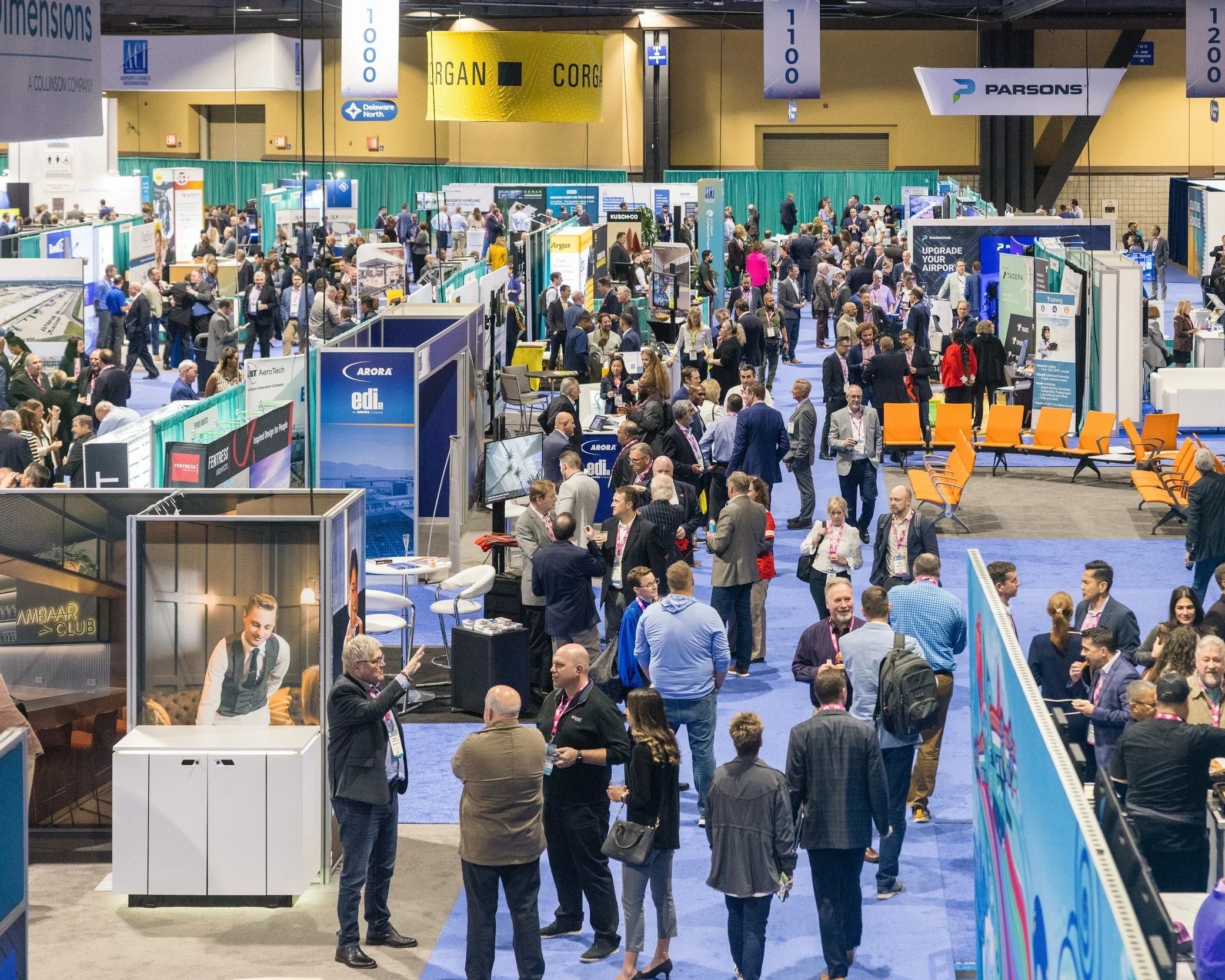
The downtown Atlanta cluster, encompassing the Georgia World Congress Center, Centennial Olympic Park, and AmericasMart Atlanta, forms the epicenter for large-scale conventions where booth planning must account for high-volume buyer and delegate circulation. At the Georgia World Congress Center, exhibit halls accommodate flagship displays requiring robust structural engineering to support overhead graphics, multi-level activations, and integrated demo zones that draw crowds during peak session breaks. Centennial Olympic Park extends opportunities for hybrid indoor-outdoor conferences, necessitating weather-resilient booth elements like tension fabric wraps and portable flooring that transition smoothly between park perimeters and adjacent hall entries. AmericasMart's market-week cadence demands stands optimized for prolonged showroom hours, with ergonomic counter heights, ample storage for literature, and LED accent lighting to maintain visibility amid marathon buyer tours.
Planning coordination here emphasizes pre-event surveys of hall diagrams to position booths near high-traffic arteries, such as escalator banks or refreshment nodes, while factoring in shared power drops and rigging points specified in venue planning guides. For conventions spanning multiple days, material selections prioritize scratch-resistant surfaces and reinforced shelving to withstand repeated handling, coupled with ventilation considerations for enclosed demo pods housing prototypes or live tech. This zone's depth in exhibit demand underscores the need for phased build schedules aligning with union labor windows, ensuring exhibits are primed for ribbon-cutting moments that synchronize with keynote unveilings.
Airport Corridor Conference Precision
The Georgia International Convention Center and Gateway Center Arena in the College Park area leverage ATL SkyTrain connectivity, making them prime for fly-in conferences where booth coordination focuses on rapid deployment and compact efficiency to match attendee itineraries compressed by travel schedules. The Georgia International Convention Center's floor plans support flexible exhibit zoning, ideal for mid-sized conferences needing clustered booth villages with central communal hubs for networking receptions, demanding interconnecting drape systems and uniform aisle widths to facilitate smooth navigation during shuttle-timed sessions. Gateway Center Arena adds a sports-adjacent vibe for hybrid events, requiring stands with dynamic backdrops that echo arena energy, such as curved LED walls and suspended brand orbs compatible with arena truss grids.
Operational planning in this corridor prioritizes Just in Time logistics, with booths designed for forklift-free assembly via wheeled bases and snap-fit components that minimize setup hours ahead of first arrivals. Power and data runs must anticipate mobile device charging stations integrated into counter ledges, while acoustic paneling dampens arena echoes for intimate panel discussions within booth perimeters. Fast-turn meeting programs here benefit from stackable furniture and roll-up banners that allow reconfiguration between breakout tracks, ensuring visual consistency across evolving agendas without full teardowns.
Suburban Venue Adaptability
Northwest Atlanta's Cobb Convention Center and the northeast Duluth/Gwinnett area's Gas South Convention Center serve corporate, association, and regional conferences with ballroom-driven exhibits, where booth strategies emphasize modularity to fit divisible spaces and adjacent pre-function areas. Cobb Convention Center's layouts favor linear booth runs along ballroom walls, calling for slim-profile towers and hanging signs that maximize vertical space without encroaching on dance floor equivalents used for gala transitions. Gas South Convention Center's suburban accessibility supports community-tied events, integrating exhibits with arena seating risers via low-profile barriers and wheeled podiums that reposition effortlessly for award ceremonies or vendor fairs.
Coordination across these venues involves syncing with regional traffic patterns, opting for lightweight aluminum extrusions and fabric graphics that ship flat and inflate on-site for volume without bulk. Multi-purpose halls here often double as registration zones, so booths incorporate self-contained check-in kiosks with privacy screens and cable management to avoid trip hazards during high-overlap periods. Sustainability angles gain traction in suburban formats, prompting recyclable substrate choices and LED efficiency to align with association charters focused on green initiatives amid extended regional drives.
Booth Fabrication Tailored to Conference Formats
Conference booths demand fabrication approaches that balance portability with presence, starting with frame systems engineered for repeated deployments across Atlanta's venue spectrum, from GWCC's vast halls to GICC's streamlined bays. Truss-based islands provide 360-degree visibility for central placements, incorporating tensioned mesh for lightweight diffusion of backlit logos that shimmer under varying hall illuminations. For perimeter walls, Segmental panel kits snap together with hidden fasteners, allowing custom curvatures that guide sightlines toward hero product plinths elevated on stabilized pedestals.
Graphics production leans toward UV-direct prints on corrugated substrates for rigidity in high-touch zones, paired with interchangeable magnetic headers for agenda-specific overlays without retooling. Demo theaters within booths feature tiered risers clad in acoustical vinyl, with integrated projector mounts calibrated for throw distances matching typical 10x20 footprints. Fabrication timelines align with conference RFPs, incorporating Proof of Concept mockups to validate scale models against venue max heights, typically capped at 16 feet for hung elements in convention settings.
Logistics and Timeline Mastery
Mastering conference timelines in Atlanta requires granular breakdowns of advance warehousing proxies, freight routing through Hartsfield-Jackson gateways, and venue-specific dock schedules to orchestrate booth arrivals without bottlenecks. Pre-show coordination maps out I&D crews' paths, prioritizing high-value components like interactive kiosks for First Off Truck priority, followed by bulk graphics rolled in protective tubes to prevent creases during elevator transits in multi-level facilities like AmericasMart. On-site, assembly sequences commence with anchor points secured to carpet spikes, progressing to shell builds before electrical tie-ins tested under load to preempt blackouts during live streams.
Dismantle phases reverse this choreography, with deconstruction phased to clear aisles within union curfews, compressing crating to overnight carriers bound for next-market hops. Contingency layers address weather delays in park-proximal setups or SkyTrain disruptions, buffering with on-hand spares like extra LEDs and velcro-backed panels. Metrics tracking via pre/post scans ensures asset recovery rates exceed 98%, feeding into iterative refinements for serial conference circuits.
Technical Integration for Engagement
Conferences thrive on tech-infused booths, where planning integrates RF scanning for lead capture, wireless charging pads embedded in tabletops, and QR-driven virtual tours syncing with booth footprints for overflow traffic. AV coordination specifies booth-wide dimmers to spotlight hero zones during pitches, with DMX-controlled RGB washes animating facades in sync with playlist-driven loops. For GWCC-scale events, fiber backbone readiness allows 4K streaming uplinks, while suburban venues suffice with Cat6 daisy chains powering tablet arrays for poll interactions.
Power budgeting caps at 20 amps per 10x10, distributed via distro boxes with GFCI breakers, ensuring smooth operation of motion-sensor video walls that activate on approach, extending engagement without staff prompts. Data privacy compliance weaves through endpoint configurations, with GDPR-aligned opt-ins displayed on interactive touchpoints to build trust amid digital handshakes.
Questions
Frequently asked questions
Direct answers on timing, field leadership, and venue coordination for this Atlanta scope.
How do booth sizes vary across Atlanta conference venues?
Downtown halls like Georgia World Congress Center support expansive 20x40 islands, while airport venues such as Georgia International Convention Center favor 10x20 linears for density; suburban spots like Cobb Convention Center adapt 10x10s to ballroom configs.
What logistics factor into downtown vs. suburban setups?
Downtown demands MARTA-timed loads and union windows, contrasting suburban drives allowing flexible daylight I&D without urban dock queues.
Can booths incorporate outdoor elements for park-adjacent conferences?
Yes, tension fabrics and weighted bases enable Centennial Olympic Park transitions, with IP65-rated electronics for weather exposure.
How to ensure AV compatibility in arena venues?
Gateway Center Arena setups use arena truss adapters and echo-dampening panels, pre-tested for house PA bleed.
What sustainability practices apply to conference exhibits?
Recyclable aluminum frames, LED-only lighting, and reusable fabrics minimize waste, aligning with Gas South's green standards.
How far in advance to plan booth coordination?
Six months for prime GWCC slots, three for suburban, allowing mockup iterations and freight locks.
Related links