Capabilities / Exhibitor Logistics Coordination Across Atlanta Venues
Exhibitor Logistics Coordination Across Atlanta Venues
Master the complexities of exhibitor logistics in Atlanta by coordinating smooth freight flows, material handling, and installation schedules tailored to the city's diverse convention zones from downtown clusters to airport-adjacent facilities and suburban expos.
Adapting Logistics to Atlanta's Downtown Convention Cluster
The downtown Atlanta zone, led by the Georgia World Congress Center, Centennial Olympic Park, and AmericasMart Atlanta, represents the highest concentration of exhibit demand, where logistics coordination must accommodate simultaneous large-scale conventions, public activations, and buyer showroom operations. Planners develop master timelines that sequence freight arrivals during designated move-in windows, often starting as early as 6 AM to align with union labor availability and avoid conflicts with ongoing hotel conferences or park events. This involves pre-clearing bills of lading with venue operations teams, designating forklift paths through exhibit halls, and coordinating with general service contractors for shared storage areas during peak market weeks when AmericasMart's multiple buildings host parallel gift and apparel shows.
Exhibit materials for these venues require zoning-specific manifests that differentiate between GWCC's expansive halls capable of 3.5 million square feet of exhibit space, Centennial Olympic Park's outdoor activation setups, and AmericasMart's permanent showroom integrations. Coordinators forecast drayage needs based on booth footprints, ensuring flatbed trucks access restricted downtown streets without violating MARTA transit schedules or pedestrian flow around Centennial Olympic Park. Risk assessments cover potential delays from Hartsfield-Jackson Atlanta International Airport backups spilling into the zone, prompting contingency plans like off-site holding yards coordinated in advance.
Streamlining Airport and College Park Corridor Operations
Venues in the airport and College Park corridor, including the Georgia International Convention Center and Gateway Center Arena at College Park, emphasize logistics coordination tailored to fly-in attendee patterns and ATL SkyTrain connectivity, which facilitates rapid material transfers from nearby airport cargo facilities. Planning begins with carrier selection that leverages SkyTrain's direct link to the convention center, reducing ground transport times for time-sensitive shipments arriving via international flights. Coordinators align inbound dock schedules with the center's 90,000 square feet of exhibit space, incorporating protocols for sports-adjacent activations at Gateway Center Arena where arena configurations demand flexible material staging.
Logistics for this zone account for the corridor's role in fast-turn meetings and conferences, where exhibitors often ship modular components that require quick assembly amid high-security airport proximity rules. Advance coordination includes pre-submitting hazardous materials declarations if applicable, synchronizing with local drayage firms familiar with I-85 access ramps, and building buffers for SkyTrain maintenance disruptions. Outbound planning reverses this flow, prioritizing express carrier pickups to match flight schedules and minimize holding costs in venue-limited storage.
Coordinating Suburban Venue Logistics in Cobb and Gwinnett
Suburban facilities like the Cobb Convention Center in the Cumberland and Cobb submarket and Gas South Convention Center in the Duluth and Gwinnett corridor capture corporate, association, and community events, necessitating logistics plans that navigate longer drayage hauls from central Atlanta or airport hubs while optimizing for ballroom-hybrid exhibit layouts. Coordinators create route-optimized shipping plans using I-75 and I-85 corridors, forecasting arrival clusters to match the Cobb center's 235,000 square feet of flexible space and Gas South's arena-exhibit combinations. This involves stakeholder briefings on suburban parking limitations for service vehicles and advance reservations for loading docks during regional trade show peaks.
These venues demand hybrid logistics for events blending exhibit floors with breakout sessions, where material flows must avoid disruptions to adjacent meeting rooms. Planning incorporates weather contingencies for outdoor load-ins at Gas South and traffic modeling for Cobb's proximity to Galleria mall retail surges, ensuring exhibitor readiness without overtime premiums.
Mastering Inbound Freight and Advance Shipping Protocols
Inbound freight coordination for Atlanta exhibitors hinges on detailed advance shipping protocols that compile exhibitor-supplied packing lists into venue-approved manifests, distributed to carriers 30-45 days pre-show to secure priority slots at facilities like GWCC or GICC. This process categorizes freight by weight, dimensions, and handling needs—such as crated booth islands versus loose graphics—while cross-referencing against venue freight yards' capacities, which vary from GWCC's multi-level docks to AmericasMart's street-level access. Coordinators facilitate label standardization to prevent misrouting in high-volume zones, integrating GPS tracking for real-time visibility from origin to dock.
Contingencies address Atlanta's logistics variables, including MARTA construction impacts downtown or seasonal I-285 congestion, by designating alternate carriers and holding patterns at regional yards. Reconciliation begins at receipt, matching inbound counts against exhibitor inventories to flag discrepancies before hall assignments.
On-Site Material Handling and Booth Sequencing
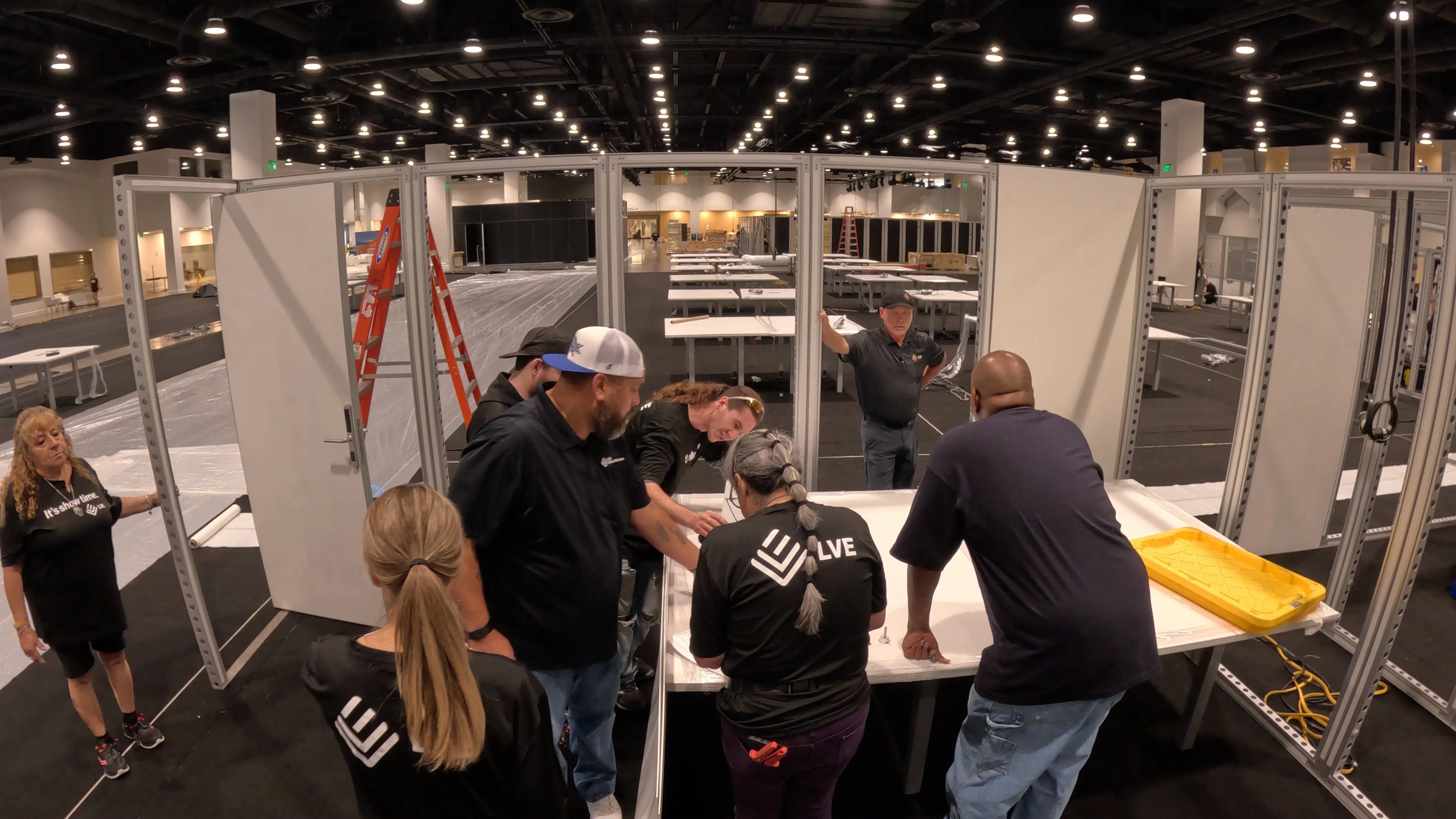
Once inbound freight clears venue docks, on-site coordination directs material handling through sequenced paths that respect booth adjacency rules and union dispatch orders at union venues like GWCC. Planners draft Floor by Floor flow diagrams, prioritizing high-bay installations in halls A-D at GWCC or multi-story navigations at AmericasMart, while staging smaller items near exhibitor check-in zones. This sequencing minimizes cross-traffic in congested clusters like downtown Atlanta, where Centennial Park events amplify pedestrian volumes.
Handling protocols extend to specialized needs, such as carpet protection under heavy islands or padded rigging for suspended elements, all synced with general contractor timelines. Daily briefings update exhibitors on progress, adjusting for variances like delayed union crews or power upgrades.
Teardown, Outbound Shipping, and Post-Show Reconciliation
Teardown coordination reverses inbound precision, scheduling labor calls 24-48 hours post-show close to pack out booths per reverse manifests, targeting outbound dock windows before venue turnovers at places like Cobb Convention Center. Coordinators oversee labeling for return shipments, segregating empties from keep-behinds, and coordinating with carriers for bulk pickups that consolidate across exhibitors to cut costs in spread-out zones like Gwinnett.
Post-show phases include full inventory audits against inbound records, documenting damages or shortages for carrier claims, and compiling performance reports detailing on-time metrics, cost variances, and lessons for future Atlanta events. This closes the loop, informing refined plans for recurring shows across the city's venue portfolio.
Questions
Frequently asked questions
Direct answers on timing, field leadership, and venue coordination for this Atlanta scope.
How do venue zones impact exhibitor logistics planning in Atlanta?
Atlanta divides into downtown, airport/College Park, Cumberland/Cobb, and Duluth/Gwinnett zones, each with unique access, dock capacities, and demand patterns—downtown for mega-shows, airport for fly-ins, suburbs for regional events—requiring zoned routing and timing adjustments.
What advance preparations are needed for GWCC freight?
Submit manifests 30-45 days ahead, align with union move-in windows starting 6 AM, and plan for multi-hall sequencing to handle up to 3.5 million square feet of space.
How does ATL SkyTrain affect GICC logistics?
SkyTrain provides direct Airport to Center links, enabling faster inbound from cargo facilities and prioritized planning for fly-in conferences at GICC and Gateway Center Arena.
What protocols apply to suburban venues like Cobb?
Focus on I-75/I-85 routing, ballroom-exhibit hybrids, and dock reservations amid retail and community overlaps for efficient regional handling.
How is post-show reconciliation handled?
Conduct inventory audits, process carrier claims for discrepancies, and generate reports on metrics like on-time delivery across all zones.
Why sequence booth installations carefully?
To prevent cross-booth disruptions, respect union rules, and align with power installs in dense halls like those at AmericasMart or GWCC.
Related links