
Locations / Peachtree Corners GA Trade Show Exhibit Planning
Peachtree Corners GA Trade Show Exhibit Planning
Strategic coordination resources for businesses in Peachtree Corners participating in Atlanta's northeast suburban trade show corridor.
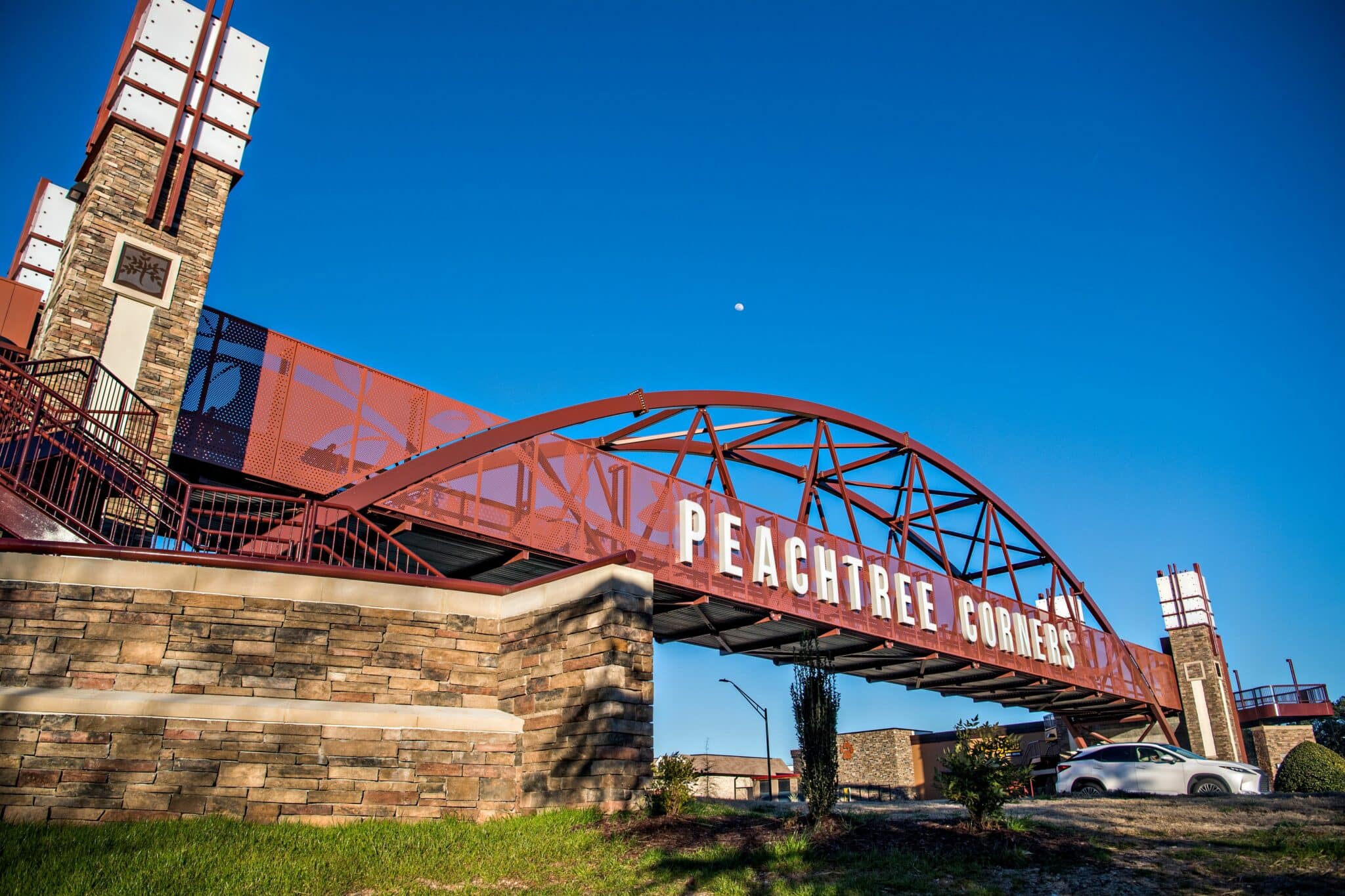
Peachtree Corners in Atlanta's Distributed Trade Show Geography
Atlanta trade show activity operates across four distinct zones rather than concentrating in a single downtown core. The downtown district leverages the Georgia World Congress Center, Centennial Olympic Park, and AmericasMart to generate high-volume exhibit and buyer-showroom demand. This creates one operational environment characterized by large national shows and dense foot traffic.
The airport corridor centered on the Georgia International Convention Center and Gateway Center Arena prioritizes fly-in accessibility via the ATL SkyTrain and supports shorter-duration events where convenience drives attendance. Northwest suburban venues including the Cobb Convention Center capture a different mix of corporate and association programs. The northeast corridor, encompassing Peachtree Corners, Norcross, and Duluth, addresses demand through facilities such as the Gas South Convention Center that serve regional corporate, technology, and community gatherings.
For organizations based in Peachtree Corners this geography creates both opportunity and planning complexity. The city's location provides efficient access to northeast suburban venues while remaining within reasonable driving distance of downtown and airport facilities. Coordination therefore requires understanding how exhibit elements should adapt to each zone's unique scale, audience expectations, and facility constraints rather than applying a single downtown-centric approach across all events.
This differentiated landscape rewards programs that calibrate booth presence, messaging, and interactive elements to the specific venue cluster where the event occurs. Northeast suburban events often feature audiences seeking deeper product demonstrations and relationship building compared to the faster-paced downtown convention environment.
Northeast Corridor Venue Operational Details
The Duluth and Gwinnett area venues that serve Peachtree Corners organizations operate with distinct specifications compared to downtown Atlanta facilities. These suburban centers typically accommodate mid-scale corporate meetings, technology showcases, and association conferences where exhibit spaces support extended conversations rather than high-volume traffic.
Planning for these venues requires attention to column spacing, ceiling heights, electrical distribution, and loading dock configurations that differ from the megacenter infrastructure downtown. Load-in and load-out timelines also vary, often allowing more deliberate installation windows that support refined custom fabrication approaches.
The Gas South Convention Center functions as a primary destination in this corridor, drawing events that align with the innovation and business communities prevalent in Peachtree Corners and nearby cities including Johns Creek and Alpharetta. Coordination involves mapping exhibit dimensions to these facility parameters while ensuring the design communicates effectively within the more focused attendee environments these venues create.
Successful programs also consider how northeast events connect to the larger Atlanta market. Many organizations based in Peachtree Corners participate in both suburban regional shows and occasional downtown flagship events, requiring modular or adaptable exhibit systems that maintain visual and functional consistency across different facility types.
Exhibit Strategy Differentiation by Atlanta Zone
Effective exhibit planning recognizes that audience expectations shift across Atlanta's trade show zones. Downtown events at the Georgia World Congress Center often involve broad industry audiences moving quickly between multiple activations, favoring bold graphics, prominent branding, and efficient traffic flow designs.
In contrast, northeast corridor events serving Peachtree Corners organizations typically attract more targeted corporate and technology professionals who allocate longer dwell times for detailed demonstrations and relationship development. This environment supports interactive zones, product application theaters, and consultation areas integrated into the booth footprint.
The planning process therefore evaluates the primary venue cluster for each event and adjusts elements such as counter heights, technology integration, storage requirements, and graphic scale accordingly. Programs originating from Peachtree Corners frequently benefit from designs that emphasize innovation storytelling and technical specificity given the business composition of the northeast suburbs.
Coordination resources help map these differences to prevent the inefficiency of applying uniform solutions across dissimilar event types. The result is higher engagement metrics and better alignment between exhibit investment and the specific business development objectives associated with each Atlanta submarket.
Transportation and Logistics Coordination from Peachtree Corners
Peachtree Corners benefits from strong connectivity via I-85 and SR-141 to both northeast suburban venues and the wider Atlanta convention network. This positioning supports efficient movement of exhibit materials to Gas South Convention Center in Duluth as well as to downtown and airport facilities when event schedules require multi-zone participation.
Logistics planning for northeast corridor events typically involves shorter material transport distances within the suburban grid compared to cross-metro movements to the Georgia World Congress Center or Georgia International Convention Center. However, programs that span multiple zones must account for variable traffic patterns, dock scheduling differences, and storage options between urban and suburban facilities.
Authoritative coordination considers these variables during initial program development rather than as afterthoughts. Timeline frameworks incorporate buffer periods appropriate to each venue type while ensuring brand assets arrive in optimal condition regardless of the specific Atlanta submarket destination.
The northeast location also facilitates access to specialized fabrication and refinement resources available in the broader Atlanta market. This allows Peachtree Corners organizations to develop sophisticated custom exhibits while maintaining practical logistics for the full range of events they target across all four operational zones.
Technology Integration and Interactive Exhibit Planning
The business composition of Peachtree Corners, with its concentration of technology and innovation companies, influences the types of exhibit experiences that perform well in the northeast corridor. Events at venues like Gas South often reward demonstrations that allow attendees to interact directly with products, data visualizations, and digital interfaces.
Planning resources emphasize integration of these elements in ways that align with venue power and connectivity capabilities. Northeast suburban facilities typically provide different utility configurations than downtown megacenters, requiring designs that accommodate these realities without sacrificing the immersive quality expected by technology-focused audiences.
Successful programs also maintain consistency in digital presentation whether the event occurs in a suburban setting or as part of a larger downtown activation. This requires careful selection of modular components, display systems, and content frameworks that translate effectively across Atlanta's varied venue environments.
Measurement frameworks for these technology-forward exhibits focus on engagement duration, demonstration completion rates, and qualified lead capture rather than pure traffic volume. Such metrics better reflect the relationship-building objectives common in northeast corridor events.
Budget and Timeline Frameworks for Northeast Events
Trade show participation from Peachtree Corners requires budget models that reflect the scale and objectives of northeast suburban events. These programs often operate with different cost structures than downtown flagship exhibitions due to variations in booth size expectations, exhibit duration, and audience volume.
Planning involves establishing clear parameters for design, fabrication, shipping, installation, and measurement while allocating resources according to the primary venue cluster. Association conferences common in the Gwinnett corridor may prioritize educational content integration while corporate technology events emphasize product demonstration capabilities.
Timeline coordination begins with venue-specific deadlines for submissions, approvals, and material arrival. Northeast facilities frequently publish distinct schedules compared to the Georgia World Congress Center or Georgia International Convention Center, necessitating customized project management approaches.
The most effective programs treat these events as components of a larger Atlanta market strategy rather than isolated activities. This perspective enables economies of scale in design and fabrication while ensuring each exhibition advances specific business development goals appropriate to its zone and audience.
Developing Consistent Multi-Zone Exhibit Programs
Many organizations based in Peachtree Corners participate in events across multiple Atlanta trade show zones throughout the year. This reality creates the need for coordinated programs that preserve brand integrity while adapting to the operational requirements of downtown, airport, northwest, and northeast venues.
Professional planning resources help develop master strategies that identify core brand elements, messaging platforms, and interactive approaches suitable for modification according to specific event contexts. The result is a cohesive market presence that leverages the strengths of each Atlanta submarket.
This approach proves particularly valuable for technology and corporate entities in Peachtree Corners that use suburban events for regional relationship building and downtown exhibitions for national positioning. The planning process ensures that exhibit assets created for one environment can inform or integrate with assets deployed in another.
Long-term coordination also incorporates lessons learned from each zone into future program development. Performance data from Gas South events can refine approaches for Cobb or GWCC exhibitions, creating a continuously improving Atlanta-wide exhibit strategy grounded in the distinct characteristics of each operational corridor.
Questions
Frequently asked questions
Direct answers on timing, field leadership, and venue coordination for this Atlanta scope.
How does Peachtree Corners fit into Atlanta's overall trade show market?
Peachtree Corners forms part of the northeast suburban corridor within Atlanta's four-zone trade show structure. This positions businesses to access corporate, association, and technology events at facilities like Gas South Convention Center while maintaining connectivity to downtown venues including the Georgia World Congress Center and airport-adjacent centers such as GICC.
What makes northeast corridor events different from downtown Atlanta exhibitions?
Northeast events serving Peachtree Corners typically feature more focused audiences with longer dwell times, emphasizing product demonstrations and relationship development. Downtown activations at GWCC and AmericasMart often involve higher traffic volumes and broader industry audiences, requiring different exhibit scaling and engagement strategies.
Which venues primarily serve organizations based in Peachtree Corners?
The Gas South Convention Center serves as the primary northeast anchor for events relevant to Peachtree Corners businesses. Additional participation often extends to the Georgia World Congress Center downtown, Georgia International Convention Center near the airport, and Cobb Convention Center depending on specific event objectives and target audiences.
How should exhibit designs adapt for suburban versus urban Atlanta venues?
Suburban northeast venues favor interactive and demonstration-focused designs that support extended consultations. Urban downtown venues emphasize visibility, efficient traffic patterns, and large-scale graphics. Professional coordination ensures designs address the specific load-in, utility, and audience flow characteristics of each facility type.
What transportation factors matter for Peachtree Corners exhibitors?
Proximity to I-85 and SR-141 provides efficient routes to both northeast suburban venues and broader Atlanta facilities. Planning must account for variable traffic patterns, dock scheduling differences between suburban and downtown locations, and appropriate material transport timelines calibrated to each event's operational zone.
Why is zone-specific planning important for Atlanta trade shows?
Each of Atlanta's four trade show corridors presents distinct audience profiles, venue specifications, and business objectives. Coordination that differentiates approaches by zone produces higher engagement and better alignment between exhibit investment and the specific outcomes available in downtown, airport, northwest, and northeast market segments.
Related links