
Locations / Trade Show Exhibit Planning and Custom Booth Coordination for Johns Creek, GA
Trade Show Exhibit Planning and Custom Booth Coordination for Johns Creek, GA
Strategic resources for designing, fabricating, and coordinating high-performance exhibits that serve corporate and association events across the northeast Atlanta corridor and the full metro venue network.
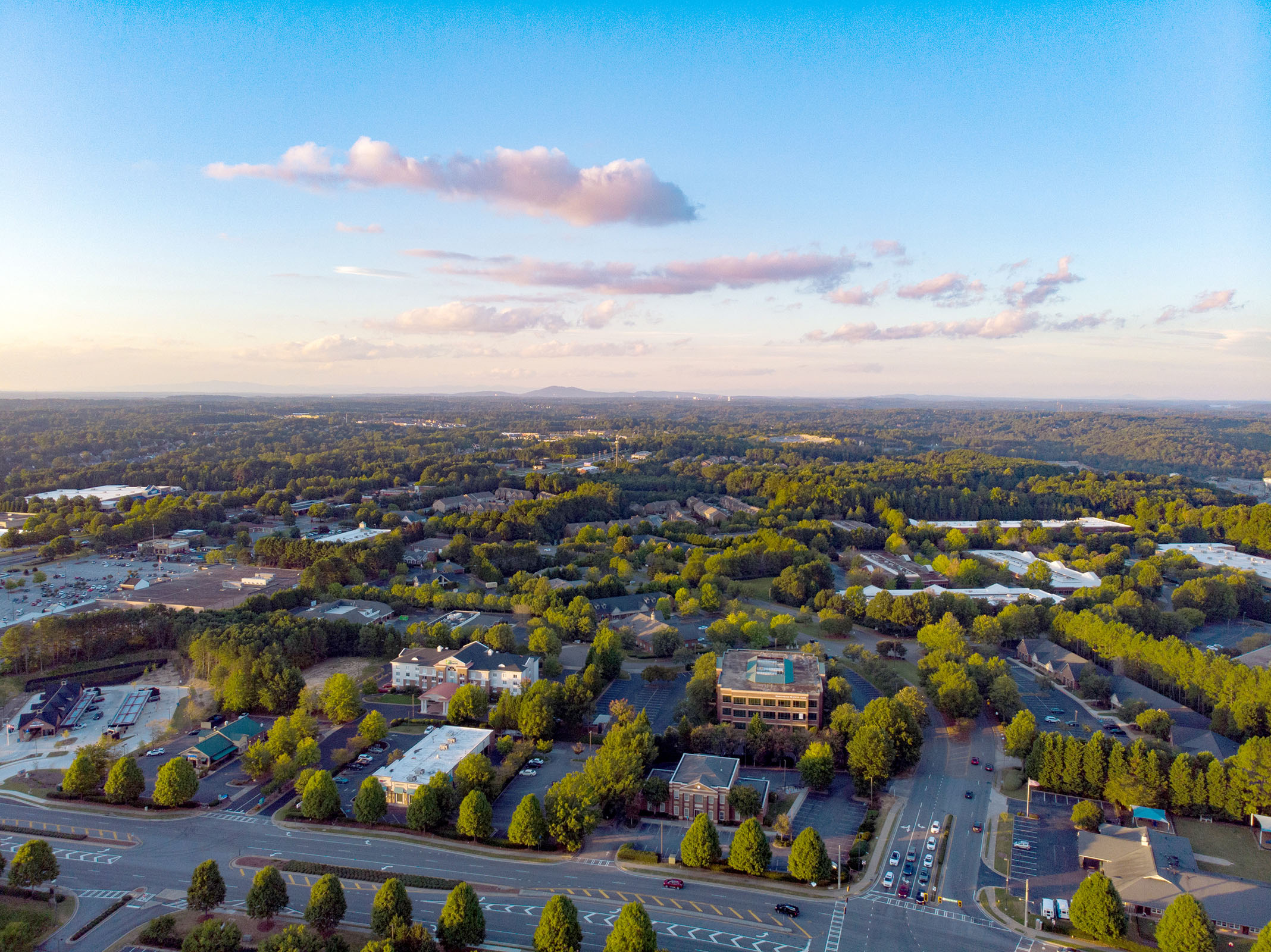
Johns Creek Within Atlanta’s Four-Zone Trade Show Framework
Atlanta’s convention activity operates across four practical zones rather than a single concentrated core. Downtown Atlanta anchors the flagship district with the Georgia World Congress Center, Centennial Olympic Park, and AmericasMart generating dense exhibit demand. The airport corridor centered on the Georgia International Convention Center and Gateway Center Arena prioritizes fly-in convenience via ATL SkyTrain. Northwest suburban venues such as the Cobb Galleria capture corporate events outside the urban core, while the northeast corridor encompassing Johns Creek, Duluth, and Gwinnett draws association, technology, and community gatherings at facilities scaled for mid-sized productions.
Johns Creek’s location in northern Fulton County places it at the intersection of major arteries including GA-400 and proximity to the Duluth-Gwinnett cluster. This positioning allows exhibitors to participate in events that range from targeted corporate showcases to larger regional conventions without requiring entirely separate booth inventories. Planning therefore begins with zone-aware design briefs that specify dimensional flexibility, shipping tolerances, and graphic modularity so the same core structure can be reconfigured for different hall footprints and ceiling heights.
Effective coordination recognizes that suburban venues often emphasize relationship-building over pure traffic volume. Booths serving the Johns Creek market frequently incorporate lounge-style configurations, demonstration stations, and technology touchpoints that facilitate longer conversations. These elements must still compress efficiently for transport and storage between shows that may alternate between northeast suburban dates and downtown blocks.
Custom Fabrication Approaches Optimized for Northeast Metro Events
Stand-builder demand in the Atlanta region increasingly favors custom fabrication over pure rental inventories, particularly for exhibitors operating in competitive suburban markets like Johns Creek. Custom programs allow precise control over brand expression, material quality, and functional features that differentiate among technology-oriented and professional service audiences prevalent in the northeast corridor. Fabrication decisions made early in the planning cycle directly influence how effectively a booth can transition between inline, peninsula, and island configurations across multiple venue types.
Materials selected for Johns Creek–oriented exhibits must balance visual impact with durability across repeated installations. Lightweight composites, precision-machined aluminum frames, and integrated LED lighting systems provide the structural integrity needed for suburban halls while reducing overall shipping weight. Graphic skins and modular panels enable rapid updates between events without full reconstruction, preserving budget for experiential upgrades rather than base structure replacement.
Fabrication partners centered in the Atlanta ecosystem maintain tolerances that satisfy both the tighter loading docks of suburban facilities and the expansive floors of the Georgia World Congress Center. This consistency removes variables that otherwise surface when exhibits built for one zone encounter unexpected constraints in another. Detailed shop drawings, pre-build reviews, and sample material kits become essential planning tools that reduce on-site adjustments and accelerate install timelines.
Logistics Coordination Across Atlanta’s Suburban and Urban Venues
Successful exhibit programs serving Johns Creek require logistics planning that accounts for the full Atlanta metro rather than isolated suburban movements. Material routes typically originate from fabrication facilities in the broader Atlanta industrial ring, move through consolidation points, and reach northeast venues via GA-400 or I-85 corridors. Advance freight scheduling becomes critical because suburban loading docks often operate under tighter windows than downtown union halls.
Timeline benchmarks should begin at least four months prior to the first event in a northeast corridor sequence. This interval allows for design approval, material sourcing, full-scale mockups where necessary, and buffer time for carrier coordination. When a program spans both suburban dates and downtown shows at the Georgia World Congress Center or AmericasMart, unified project management prevents conflicting ship dates or graphic versioning errors.
Documentation packages including venue-specific floor plans, electrical requirements, and labor union guidelines for each facility help maintain compliance without last-minute revisions. Although Johns Creek itself hosts fewer large-scale public expos, many companies headquartered there exhibit at nearby Gas South Convention Center and Cobb events, making centralized coordination a practical necessity rather than an option.
Audience Engagement and Booth Experience Design for the Northeast Corridor
Professional audiences drawn to events in the Johns Creek and Duluth-Gwinnett area respond to booth experiences that emphasize substance over spectacle. Demonstrations, data visualizations, and consultative meeting areas tend to outperform purely promotional configurations. Planning therefore allocates square footage for semi-private conversation pods while preserving open sight lines that invite approach from main aisles.
Lighting and digital integration must perform under the brighter ambient conditions typical of suburban ballrooms and conference centers. High-contrast graphics, directional lighting, and concise messaging hierarchies help cut through visual competition. Interactive elements should be engineered for rapid reset between demonstrations, minimizing downtime during peak traffic windows.
Brand storytelling for the northeast market benefits from narratives that connect corporate capability with regional relevance. Exhibits that reference Atlanta’s role as a logistics and innovation hub resonate with decision-makers who travel between suburban corporate campuses and downtown industry events. This contextual alignment turns the booth into a continuation of the company’s larger market presence rather than an isolated activation.
Budget Allocation and ROI Measurement for Johns Creek Programs
Budget frameworks for Johns Creek–targeted exhibits allocate roughly 55 percent to custom fabrication, 20 percent to graphics and technology, 15 percent to logistics and storage, and 10 percent to measurement and refinement. This distribution reflects the higher initial investment in durable assets that deliver across multiple events within the Atlanta zone network. Amortization models typically project 18- to 36-month lifecycles depending on show frequency and reconfiguration scope.
ROI metrics should extend beyond lead volume to include engagement duration, qualified meeting counts, and post-show pipeline velocity. Suburban events often produce deeper conversations per interaction, making qualitative scoring systems particularly relevant. Tracking tools embedded in booth design, such as Scan to Meet applications or follow-up automation triggers, help capture data without disrupting the attendee experience.
Contingency planning within budgets accounts for potential shifts between venue types. A program initially aimed at northeast suburban dates may add a downtown activation at the Georgia International Convention Center or Cobb Galleria, requiring incremental graphic or accessory packages. Early identification of these expansion scenarios prevents reactive spending later in the fiscal year.
Timeline Benchmarks and Project Management Best Practices
Project timelines for Johns Creek market exhibits follow a standardized sequence beginning with strategy briefing eight to ten weeks before initial fabrication release. Concept development occupies the first three weeks, followed by two weeks of client review and revision. Fabrication release then triggers a six- to eight-week build window depending on complexity and material lead times.
Pre-show coordination checkpoints occur at the four-week, two-week, and one-week marks prior to move-in. These reviews verify carrier bookings, labor estimates for each venue, and graphic proofing status. When programs include both suburban and downtown elements, a master calendar prevents overlap in shipping windows that could otherwise strand materials between the northeast corridor and airport or downtown clusters.
Post-show debriefs conducted within ten days of dismantle capture lessons on booth performance, material durability, and audience response. These insights feed directly into the next design iteration, creating a continuous improvement loop that strengthens exhibit effectiveness across successive Atlanta events. Centralized project management maintains institutional knowledge rather than restarting from zero with each new show cycle.
Adapting to Atlanta’s Evolving Suburban Venue Landscape
The northeast corridor continues to capture a growing share of corporate and association events that once defaulted exclusively to downtown. Facilities in the Duluth-Gwinnett and Johns Creek orbit offer modern infrastructure, ample parking, and reduced travel time for regional attendees. Exhibits planned for these venues therefore prioritize ease of setup, intuitive wayfinding, and technology that functions reliably without extensive on-site technical support.
Long-term programs serving the Johns Creek market should incorporate future-proofing elements such as upgradable lighting arrays, interchangeable graphic skins, and structural frames designed for additional levels or accessories. These features extend asset life across evolving venue requirements while controlling long-term costs. Coordination that views the entire Atlanta region as a single ecosystem rather than isolated markets delivers measurable efficiency gains in both time and budget.
By maintaining rigorous documentation, standardized approval processes, and zone-aware design principles, exhibitors position themselves to capitalize on opportunities wherever they arise within the Atlanta metro—whether at suburban centers near Johns Creek or the flagship halls downtown. This disciplined approach separates high-performing programs from those that treat each event in isolation.
Questions
Frequently asked questions
Direct answers on timing, field leadership, and venue coordination for this Atlanta scope.
How does Johns Creek fit into Atlanta’s overall trade show geography?
Johns Creek operates as a key suburban node within the northeast corridor that complements downtown Atlanta, the airport zone, and the Cobb-Cumberland submarket. Its proximity to the Duluth-Gwinnett cluster allows exhibitors to access both mid-sized suburban events and larger conventions at venues such as the Georgia World Congress Center.
Why prioritize custom fabrication for exhibits serving the Johns Creek market?
Custom fabrication provides precise control over brand expression, dimensional flexibility, and technology integration required by professional audiences in the northeast metro. Modular custom stands deliver superior longevity and reconfiguration options compared with generic rental inventory when moving between suburban and downtown Atlanta venues.
What lead time is recommended for planning exhibits targeting Johns Creek events?
Initiate planning at least four months prior to the first event in any northeast corridor sequence. This interval accommodates strategy, design approval, fabrication, and logistics coordination across Atlanta’s four operational zones.
How do suburban venues near Johns Creek differ from downtown Atlanta halls?
Suburban facilities typically feature tighter loading schedules, brighter ambient lighting, and audience profiles that favor consultative engagement over high-volume traffic. Booths must therefore balance demonstration space with private meeting areas while maintaining compatibility with the larger footprints and union rules of downtown venues like the GWCC.
What metrics best measure success for Johns Creek–oriented exhibit programs?
Beyond lead volume, track engagement duration, qualified meeting counts, and post-show pipeline velocity. Suburban events often produce deeper interactions, making qualitative scoring combined with digital capture tools particularly effective for ROI analysis.
Can a single booth program serve both Johns Creek suburban events and downtown conventions?
Yes. Modular custom designs with interchangeable graphics and reconfigurable components allow the same core structure to adapt to different hall dimensions, ceiling heights, and audience densities across Atlanta’s downtown, airport, Cobb, and northeast zones.
Related links